Wisdom Teeth
Wisdom Teeth Removal: When Is It Time to Have Your Wisdom Teeth Removed?
For many teenagers and young adults, hearing the words “wisdom teeth removal” is almost a rite of passage. Maybe your dentist just mentioned that your wisdom teeth are coming in. Maybe an X-ray shows that they are impacted. Or perhaps you are already experiencing pain or swelling in the back of your mouth.
Whatever brings you to the conversation, it is normal to have questions.
Do my wisdom teeth really need to come out? Why do so many people have them removed in their teens or early 20s? What happens if I leave them alone? Do I need a referral to see an oral surgeon? And how do I choose the right provider?
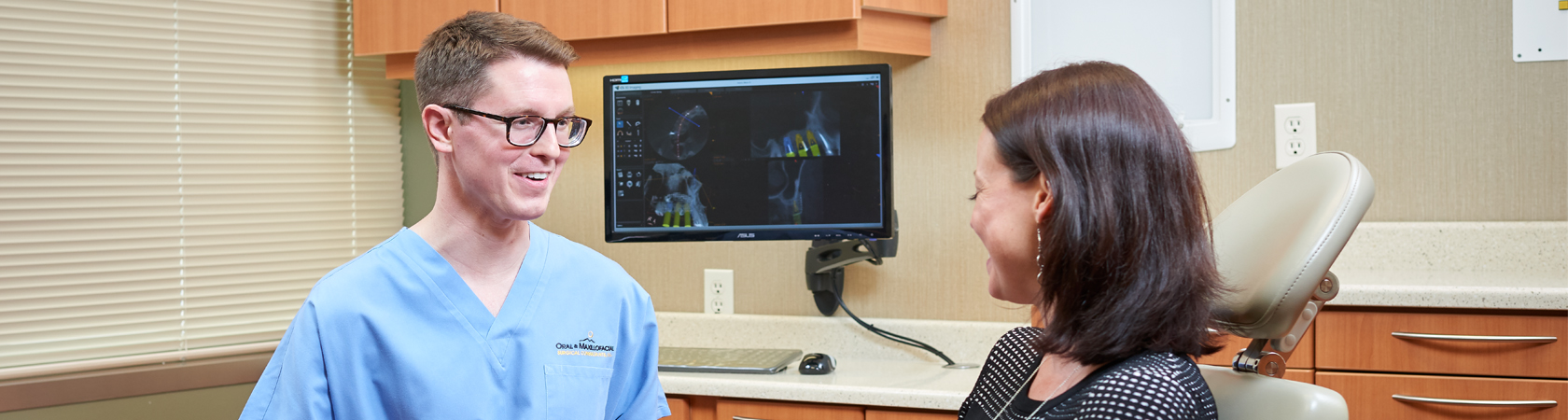
At Oral & Maxillofacial Surgical Consultants (OMSC) in Minnesota, our oral and maxillofacial surgeons regularly care for patients of all ages who need wisdom teeth evaluation and removal. Our goal is to make the process as comfortable, understandable, and personalized as possible.
Learn more about wisdom teeth removal at OMSC.
What Are Wisdom Teeth?
Wisdom teeth are also called third molars. They are the last permanent teeth to develop and are located at the very back of your upper and lower jaws.
They typically begin to erupt between the ages of 17 and 25. Unfortunately, many people do not have enough room in their mouths for these teeth to fully erupt into a healthy, functional position. When a wisdom tooth cannot properly emerge through the gums, it is considered impacted.
An impacted wisdom tooth may grow at an angle, remain partially covered by gum tissue, or stay completely within the jawbone. Depending on its position, it may be difficult or impossible to keep clean.
That can create problems later.
Common Symptoms That May Lead to Wisdom Teeth Removal
Sometimes wisdom teeth cause obvious symptoms. Other times, they can cause problems without producing noticeable pain.
Some common symptoms and warning signs include:
- Pain or tenderness in the back of the mouth
- Swelling around the gums
- Red, irritated, or bleeding gums near a wisdom tooth
- Difficulty opening your mouth
- Pain or difficulty when chewing
- Bad breath or an unpleasant taste
- Repeated infections around a partially erupted tooth
- Food becoming trapped around the wisdom teeth
- Tooth decay
- Damage or pressure affecting neighboring teeth
- Gum disease around the wisdom teeth
Importantly, not having pain does not necessarily mean your wisdom teeth are problem-free. An impacted wisdom tooth can develop disease or damage surrounding teeth without causing significant symptoms. The American Association of Oral and Maxillofacial Surgeons recommends that wisdom teeth be evaluated and monitored rather than simply ignored.
This is one reason routine dental X-rays and examinations are so important during the years when wisdom teeth are developing.
When Should Wisdom Teeth Be Removed?
There is no single age or rule that applies to every patient.
Wisdom teeth removal may be recommended when there is evidence of:
- Infection
- Gum or periodontal disease
- Cavities that cannot be restored
- Damage to neighboring teeth
- An impacted or partially erupted tooth that is likely to cause problems
- Cysts or other pathology
- A lack of adequate space for the teeth to erupt properly
- Certain orthodontic or dental treatment considerations
OMSC notes that incomplete eruption, gum disease, dental crowding, orthodontic treatment, and potential damage to adjacent teeth can all be reasons for considering third-molar removal.
On the other hand, not every wisdom tooth automatically needs to be removed. A wisdom tooth that is fully erupted, functional, healthy, easy to clean, and free of disease may sometimes be monitored instead.
The important question isn’t simply, “Do I have wisdom teeth?”
It is:
“What is the position and condition of my wisdom teeth, and what is the best plan for me?”
That answer requires an individual evaluation.
Why Do So Many Young People Have Their Wisdom Teeth Removed?
If you’re wondering why wisdom teeth removal seems so common among teenagers and young adults, there are several reasons.
First, wisdom teeth typically develop and begin to emerge during the late teenage years and early adulthood. This is when dentists and oral surgeons can evaluate how much room is available and determine whether the teeth are likely to become problematic.
Second, wisdom teeth removal is often more straightforward when performed earlier in life. OMSC notes that third-molar extractions are typically better tolerated during adolescence and young adulthood, approximately ages 15–25, because the roots may not yet be completely formed.
AAOMS similarly notes that younger patients generally have less-developed roots and softer surrounding bone, factors that can make removal less complicated and may reduce the chance of certain complications involving nearby structures.
That doesn’t mean every 17-year-old needs surgery—or that someone older cannot have wisdom teeth removed. It simply helps explain why evaluation and treatment are often discussed during the teenage and young-adult years.
What Are the Benefits of Removing Wisdom Teeth?
When wisdom teeth are causing—or are likely to cause—problems, removing them can help protect your oral health.
Potential benefits may include:
Reducing the Risk of Infection
Partially erupted wisdom teeth can create areas where bacteria and food become trapped. This can contribute to infection and inflammation around the tooth.
Protecting Neighboring Teeth
An impacted wisdom tooth can press against or damage the tooth next to it. Removing the problematic wisdom tooth may help protect the neighboring tooth from damage.
Making Oral Hygiene Easier
Wisdom teeth located at the very back of the mouth can be difficult to brush and floss effectively. Removing them may eliminate a hard-to-clean area.
Addressing Gum Disease
Wisdom teeth can contribute to gum problems, particularly when they are partially erupted or difficult to keep clean.
Preventing Certain Future Problems
Depending on the position of the tooth, removal may help prevent future infection, decay, damage to adjacent teeth, or other complications.
The potential benefits, however, should always be weighed against the risks and individual circumstances. That’s why an evaluation with an oral and maxillofacial surgeon is so important.
Do I Need a Referral to See an Oral Surgeon?
This is a question many patients—and parents—have.
You can choose the oral surgeon you want to see. In many situations, patients can contact an oral surgery practice directly to request an appointment rather than waiting for a dentist to make the appointment for them.
OMSC provides a direct scheduling option for patients who would like to request an appointment. Your dentist may also refer you to an oral surgeon, particularly when they identify a wisdom tooth that may require surgical treatment.
There is one important caveat: insurance requirements vary. Some dental or medical insurance plans may require a referral or have specific network requirements. It is always a good idea to check with your insurance company before your appointment.
Ultimately, choosing an oral surgeon is an important healthcare decision, and you should feel comfortable asking questions about the surgeon’s experience, the practice, anesthesia options, the surgical environment, and what to expect before and after the procedure.
Why Choose an Oral and Maxillofacial Surgeon for Wisdom Teeth Removal?
Oral and maxillofacial surgeons are dental specialists with advanced surgical training focused on procedures involving the mouth, jaws, face, and related structures.
Wisdom teeth can range from straightforward extractions to more complicated impacted teeth that are located deep within the jaw or close to important anatomical structures.
At OMSC, patients receive a comprehensive evaluation that includes an oral examination, review of dental imaging, and medical-history assessment. The surgeon then develops a treatment plan based on the individual patient’s anatomy and needs.
OMSC also offers several anesthesia options, including local anesthesia, nitrous oxide, IV sedation, or combinations of these approaches, depending on the patient and procedure.
Wisdom Teeth Removal for Patients of All Ages
While wisdom teeth removal is commonly associated with teenagers and young adults, wisdom teeth don’t follow a strict age rule.
Some patients may have their wisdom teeth removed in their teens. Others may not need treatment until their 20s, 30s, or later. Some people may never need their wisdom teeth removed at all.
At OMSC, our surgeons work with patients of all ages, taking into account each person’s medical history, dental health, tooth position, imaging, anxiety level, and individual circumstances.
The practice’s surgeons have extensive experience with dentoalveolar procedures, including impacted wisdom teeth, and the practice emphasizes creating a comfortable and personal surgical experience.
Whether you’re a nervous teenager coming in for your first surgical experience, a parent looking for care for your child, or an adult finally dealing with a troublesome wisdom tooth, the goal is the same: safe, thoughtful, individualized care.
Questions to Ask at Your Wisdom Teeth Consultation
Feeling prepared can make an upcoming consultation much less stressful. Consider bringing a list of questions with you.
Questions About Your Wisdom Teeth
- Are my wisdom teeth impacted?
- Do all four wisdom teeth need to be removed?
- Could I safely keep any of them?
- Are they affecting my other teeth?
- Is there evidence of infection, decay, or gum disease?
- What does my X-ray show?
Questions About Timing
- Should I have my wisdom teeth removed now or monitored?
- Is there a benefit to removing them at my current age?
- What could happen if I wait?
- How quickly do I need to make a decision?
Questions About the Procedure
- How complicated will my extraction be?
- What type of anesthesia or sedation do you recommend?
- How long will the procedure take?
- Will I need someone to drive me home?
- What should I expect during recovery?
Questions About Recovery
- How much swelling or discomfort should I expect?
- When can I return to school or work?
- When can I return to sports or exercise?
- What foods can I eat after surgery?
- What symptoms should prompt me to contact the office?
Don’t be afraid to ask questions. OMSC specifically encourages patients to discuss their concerns and ask questions during the consultation so they understand their surgical plan and options.
What Can You Expect After Wisdom Teeth Removal?
Wisdom teeth removal is a surgical procedure, so some swelling, soreness, and temporary changes to your diet are normal parts of recovery.
Your surgeon will provide specific instructions based on your procedure. OMSC provides patients with postoperative instructions and a recovery kit to help them understand what to expect after surgery.
Following your surgeon’s instructions carefully can help support a smooth recovery.
And if you have questions or concerns after surgery, don’t hesitate to contact your surgical team.
Your Wisdom Teeth Don’t Have to Be a Mystery
If your dentist has recommended that you have your wisdom teeth evaluated, you don’t have to wait until they become painful.
An evaluation can help answer some important questions:
Are my wisdom teeth healthy? Do they have enough room? Are they impacted? Should they be removed now, or can they be monitored?
Getting those answers can give you a much clearer understanding of your options.
Explore Wisdom Teeth Removal at Oral & Maxillofacial Surgical Consultants.
Experienced Wisdom Teeth Care Across Minnesota
Choosing an oral surgeon is about more than simply finding someone who removes wisdom teeth. You want a team that understands that every patient is different—and that the experience matters just as much as the procedure.
Oral & Maxillofacial Surgical Consultants is one of the largest oral surgery practices in Minnesota and the Midwest, with a long history of providing specialized oral and maxillofacial surgical care. The practice has been serving the community for more than 35 years and has a team of experienced oral and maxillofacial surgeons.
OMSC has four convenient locations serving patients throughout the Twin Cities area:
- Edina
- Wayzata
- Savage
- Chanhassen
Having four locations makes it easier for patients and families to find an office that works for them.
Whether you need wisdom teeth removal, dental implants, tooth extraction, jaw surgery, or another oral and maxillofacial procedure, the OMSC team is committed to providing compassionate, personalized care in a comfortable environment.
Ready to Talk About Your Wisdom Teeth?
If you or your child has been told that it may be time to have wisdom teeth removed, the next step is an evaluation.
You don’t have to wait until your wisdom teeth hurt. A consultation can help you understand what is happening beneath the surface, what your options are, and whether removal or monitoring makes sense for you.
Schedule a consultation with Oral & Maxillofacial Surgical Consultants today.
Schedule an Appointment with OMSC
With four convenient Twin Cities-area locations and a team experienced in caring for patients of all ages, OMSC is here to help make wisdom teeth treatment as comfortable and straightforward as possible.